
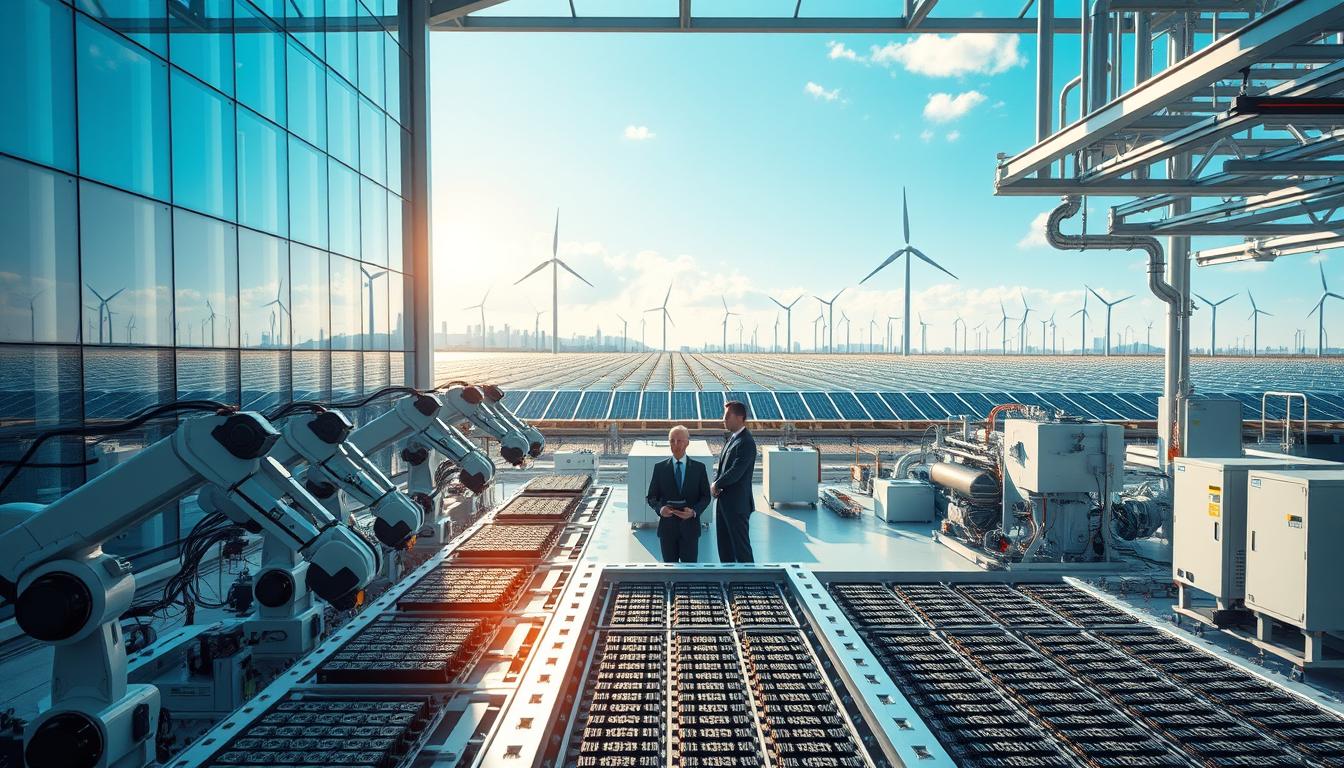
What if the solution to our transport emissions crisis isn’t just building more electric cars, but completely rethinking what happens to their power sources afterwards?
The transportation sector remains the largest source of greenhouse gas emissions in many economies. Light-duty vehicles alone contribute significantly to this problem. Replacing over 300 million internal combustion engines with cleaner alternatives represents an enormous challenge.
Current adoption rates show promise but fall far short of what’s needed. To achieve meaningful climate targets, electric vehicle numbers must skyrocket from millions to tens of millions within this decade. This rapid scaling presents both opportunities and challenges for sustainable mobility.
The complex journey from mining raw materials to final assembly requires sophisticated infrastructure. Billions are being invested globally to strengthen production capabilities and create resilient supply networks. These developments could transform how we power our vehicles while creating economic opportunities.
Key Takeaways
- The transportation sector contributes significantly to global greenhouse gas emissions
- Massive scaling of electric vehicle adoption is required to meet climate targets
- Billions are being invested in strengthening battery supply chains globally
- New infrastructure developments present economic opportunities beyond environmental benefits
- 2026 represents a pivotal year for advanced battery processing facilities
- Legislative changes are driving increased domestic supply chain activities
- These developments support circular economy principles in the automotive industry
Why 2026 Will See the Birth of EV Battery Refineries — And What It Means for Net Zero
For most of the past decade, the conversation around electric vehicle batteries has followed a predictable script: mining, manufacturing, usage, then recycling. Governments, automakers, and sustainability experts have focused heavily on improving recycling rates and securing raw materials such as lithium, nickel, and cobalt.
But by 2026, that linear narrative will quietly break. A new industrial category is emerging between battery use and recycling — one that could fundamentally reshape electric vehicle economics and accelerate global net zero goals. These facilities are not recycling plants. They are not gigafactories.
They are EV battery refineries — and they may become one of the most important, least discussed climate technologies of the second half of the decade.
What Is an EV Battery Refinery?
An EV battery refinery is designed to restore, rebalance, and extend the usable life of lithium-ion battery packs that would otherwise be considered “degraded” or end-of-life.
Unlike traditional recycling, which breaks batteries down into raw materials, refining focuses on:
- Electrochemical rejuvenation
- Cell rebalancing
- Module replacement and stabilisation
- Performance restoration
In many cases, battery refineries can recover 70–90% of original capacity without destroying the battery structure. This is neither reuse nor recycling. It is regeneration.
Why the Timing Matters: 2026 as the Inflection Point
Several global trends are converging, making battery refineries inevitable by 2026.
1. The First EV Battery Wave Is Aging
Electric vehicles sold between 2016 and 2020 are now reaching a critical phase. While many batteries remain functional, their reduced range and performance make them less appealing for primary vehicle use.
This creates a massive grey zone:
- Batteries aren’t “dead”
- Recycling them is premature
- Landfilling is unacceptable
Refineries fill this gap.
2. Recycling Alone Is Not Enough for Net Zero
While recycling recovers materials, it is:
- Energy-intensive
- Carbon-heavy
- Expensive
- Dependent on complex supply chains
Refining extends battery life before recycling becomes necessary, reducing overall emissions and raw material demand. From a net-zero perspective, the cleanest battery is the one that doesn’t need to be replaced.
3. Raw Material Pressure Is Intensifying
Despite new mining projects, the global lithium and nickel supply remains volatile. Geopolitical risk, water scarcity, and environmental opposition are slowing expansion.
Battery refineries reduce dependency on new extraction, offering governments and automakers a powerful tool for resource resilience.
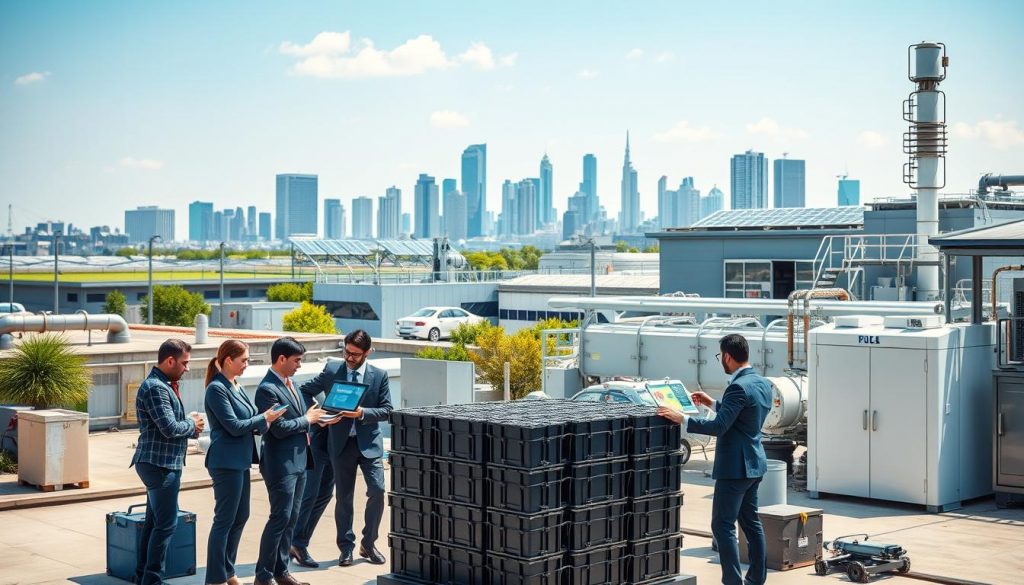
How Battery Refineries Actually Work
Although technologies vary, most battery refineries combine three core processes:
Electrochemical Reconditioning
This process restores lithium distribution within cells, reducing internal resistance and restoring capacity lost due to uneven degradation.
Thermal and Diagnostic Analysis
Advanced AI-driven diagnostics identify weak cells, thermal hotspots, and structural fatigue — enabling targeted intervention rather than full replacement.
Selective Module Replacement
Instead of discarding entire packs, technicians replace or stabilise only failing modules, dramatically lowering costs and waste. The result is a battery pack that performs reliably — though not necessarily at “as-new” levels — and remains suitable for continued EV use or second-life applications.
EV Battery Refineries: A Net-Zero Game Changer
Why Automakers Are Paying Attention
For manufacturers, battery refineries change the economics of electrification.
Lower Warranty and Recall Risk
Battery degradation is one of the most significant long-term liabilities for EV makers. Refining offers a controlled, lower-cost alternative to full pack replacement.
Secondary Market Stability
Refined batteries stabilise the used EV market by reducing range anxiety and unpredictable degradation — a key barrier to mass adoption globally.
Circular Economy Credibility
Companies can demonstrate real circularity rather than relying solely on recycling claims, which increasingly face scrutiny.
Second-Life Battery Use Gets a Boost
Battery refineries also supercharge the second-life battery market.
Refined EV batteries are ideal for:
- Grid-scale energy storage
- Renewable energy buffering
- Commercial backup power
- Microgrids in emerging markets
Without refining, second-life batteries often suffer from inconsistent performance. Refining standardises quality — the missing piece holding the sector back.
Why This Is a Net Zero Game-Changer
Battery refineries align perfectly with net-zero strategies for three key reasons.
1. Emissions Reduction
Extending battery life delays:
- Manufacturing emissions
- Mining impacts
- Recycling energy use
Every additional year of battery life substantially reduces lifecycle emissions.
2. Resource Efficiency
Refining reduces demand for virgin materials, easing pressure on fragile ecosystems and geopolitically sensitive regions.
3. Faster EV Adoption
Lower long-term costs and more predictable performance accelerate EV adoption — particularly in price-sensitive markets. Net zero is not just about cleaner technology, but better utilisation of what already exists.

Why This Industry Is Being Overlooked
EV battery refineries sit in an awkward space:
- Too industrial for consumer media
- Too technical for climate headlines
- Too new for established regulation
They also challenge entrenched interests. Traditional recycling companies and raw material suppliers have little incentive to promote extended battery lifespans. As a result, most public discussion still treats recycling as the only end-of-life solution. That framing is rapidly becoming outdated.
Policy and Regulation: Catching Up Late
By 2026, policymakers will face uncomfortable questions:
- Should refined batteries qualify for subsidies?
- How should restored capacity be certified?
- Who holds liability for second-life performance?
Regions that move quickly — particularly the EU, China, and parts of North America — could gain early leadership in a strategically vital industry. Those who don’t may find themselves locked into unnecessary material dependency.
A New Industrial Sector Is Emerging
Battery refineries will not replace recycling — they will complement it. Think of them as a middle stage in a longer, smarter lifecycle:
- Primary EV use
- Refining and restoration
- Secondary energy storage use
- Material recycling
This layered approach maximises value while minimising environmental impact.
Conclusion: EV Battery Refineries: A Net-Zero Game Changer
The Missing Link in the EV Transition
The global push for electric vehicles has focused intensely on production and adoption. But sustainability does not end at the point of sale. By 2026, EV battery refineries will emerge as the missing link, extending battery life, reducing emissions, strengthening supply chains, and making net-zero targets more achievable.
This will not be a loud revolution. No consumer will queue outside a battery refinery. But without them, the promise of sustainable electrification remains incomplete. In the race to net zero, how we care for existing batteries may matter more than how fast we make new ones.
FAQ
What exactly is an electric vehicle battery refinery?
It is a specialised industrial facility that processes end-of-life or production scrap lithium-ion units. These plants recover high-purity materials such as lithium, cobalt, and nickel using advanced techniques, thereby supporting a circular economy.
How do these facilities differ from traditional recycling centres?
Unlike conventional centres that may only recover bulk metals, these refineries use precise hydrometallurgical processes. They aim to reclaim battery-grade materials fit for manufacturing new units, maximising resource efficiency.
Why is 2026 considered a critical year for this industry?
By 2026, a significant wave of electric cars will reach end-of-life, supplying ample material for processing. Policy frameworks and investment readiness are also expected to align, enabling scalable operations.
What environmental benefits do battery refineries offer?
They drastically cut carbon emissions by reducing the need for virgin mining. Lifecycle analyses show lower energy use, fewer toxins released, and a smaller overall ecological footprint compared to raw material extraction.
Are recovered materials from refineries of high enough quality for new batteries?
Yes, advanced purification systems ensure materials meet strict industry standards. Recovered lithium, nickel, and cobalt can be directly used in cathode production, maintaining performance and safety.
What role does policy play in supporting battery refinery development in the UK?
UK regulations, like the Battery Directive, set recovery targets and may offer incentives for domestic processing. These measures support the nation’s net-zero goals and enhance supply chain security.
What are the main challenges facing wider adoption of this technology?
Key hurdles include complex material separation, high initial investment costs, and a lack of standardised designs for easy disassembly. Regulatory consistency is also needed to encourage long-term planning.
How do battery refineries contribute to supply chain resilience?
They localise material processing, reducing reliance on imported raw resources. This diversification minimises geopolitical risks and price volatility, creating a more stable and sustainable production chain.

