
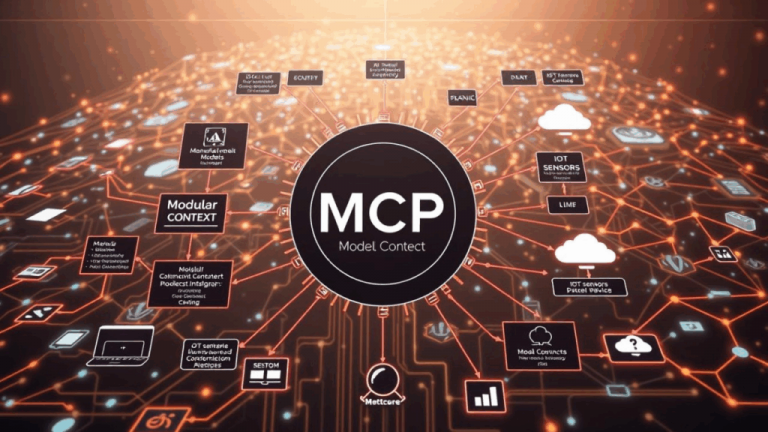
Introduction: The Evolution of AI-Database Interaction
The relationship between humans and databases has historically been mediated by specialized languages and skills. For decades, extracting insights from Data Interaction technical expertise in SQL, database architecture, and data processing frameworks. This technical barrier has often created bottlenecks in organizations, where business questions had to wait for technical translation before answers could emerge from the data.
Today, we’re witnessing a fundamental shift in this paradigm. Advanced artificial intelligence, particularly large language models (LLMs), is democratizing access to data by enabling natural language interactions with databases. This technological breakthrough isn’t merely about convenience—it represents a profound transformation in how organizations can leverage their data assets.
“The ability for AI to directly query databases, ensure data quality, and maintain pipelines is fundamentally changing who can access insights and how quickly decisions can be made.”
In this article, we’ll explore how modern AI systems are now capable of:
- Translating natural language questions into precise database queries
- Automatically generating meaningful summaries from complex datasets
- Proactively monitoring and ensuring data quality
- Maintaining and optimizing data pipelines with minimal human intervention
As these capabilities continue to mature, we’re entering an era where the conversation with data becomes more natural, more accessible, and ultimately more valuable for organizations of all kinds.
Natural Language to SQL: Breaking Down the Technical Barriers
The ability to translate natural language questions into SQL queries represents one of the most significant advancements in democratizing data access. Let’s examine how modern AI systems accomplish this complex task.
The Technical Foundation
Large language models have demonstrated remarkable capabilities in understanding the intent behind natural language queries and generating corresponding SQL code. According to a comprehensive survey published in IEEE’s database journal, LLM-based text-to-SQL systems have shown significant improvements in accuracy on benchmark datasets, with some approaches achieving over 80% accuracy on complex query tasks [1].
The underlying technology typically involves:
- Intent Recognition: Understanding what information the user is seeking
- Schema Linking: Matching natural language terms to database objects (tables, columns)
- Query Construction: Building syntactically correct SQL that captures the intended logic
- Verification: Ensuring the generated query will produce the expected results
Recent Advancements
A 2024 research paper published in AAAI introduces CogSQL, a framework that mimics human cognitive processes to enhance LLM-based text-to-SQL translation [2]. This approach breaks down query generation into distinct cognitive steps, similar to how human SQL experts approach complex questions:
- First understanding the data domain
- Then identifying key entities and relationships
- Finally constructing a logical query plan before writing SQL
This cognitive-inspired approach has led to significant improvements in handling complex queries that involve multiple tables, nested structures, and aggregations.
Practical Applications
The real-world impact of natural language to SQL technology extends across industries:
- Business intelligence: Enabling non-technical analysts to explore data directly
- Customer service: Allowing support teams to quickly retrieve customer information
- Healthcare: Helping medical professionals query patient records without specialized database knowledge
- Financial analysis: Supporting traders and analysts in quick data exploration
While these systems aren’t yet perfect—particularly when faced with highly complex or ambiguous queries—they represent a significant step toward making data more accessible throughout organizations.
Model Context Protocol (MCP): The Bridge Between AI and Databases

While natural language to SQL conversion represents a significant advancement, the underlying infrastructure that enables AI systems to securely and efficiently connect with databases is equally important. This is where Model Context Protocol (MCP) servers play a crucial role.
Understanding MCP Architecture
Model Context Protocol is an open protocol standard that provides a secure and standardized way for AI models to interact with external systems, including databases. The MCP architecture consists of several key components:
- MCP Client: Embedded within the AI system, responsible for formatting requests and handling responses
- MCP Server: Acts as the intermediary between AI systems and databases, managing authentication, permissions, and query execution
- Database Connectors: Specialized modules within the MCP server that interface with specific database systems
- Security Layer: Manages authentication, authorization, and data protection
- Caching System: Optimizes performance by storing frequent queries and results
How MCP Enables AI-Database Communication
The typical flow for an AI system accessing a database via MCP follows these steps:
- The AI system receives a natural language query from a user
- After converting it to SQL (as described in the previous section), the AI formats an MCP request including: – The server identifier – The specific database tool to invoke – Query parameters and authentication credentials
- The MCP server validates the request and permissions
- The appropriate database connector executes the query against the target database
- Results are returned through the MCP server back to the AI system
- The AI system processes and presents the results to the user
This standardized approach offers several advantages over direct database connections, including:
- Security: Centralized management of authentication and permissions
- Abstraction: AI systems don’t need database-specific connection details
- Monitoring: Comprehensive logging of all database interactions
- Performance: Connection pooling and query optimization
MCP Server Implementation Patterns
Organizations typically deploy MCP servers following one of several patterns:
- Dedicated Gateway: A standalone MCP server acting as the central access point for all AI-database interactions
- Database Proxy: MCP functionality integrated into existing database proxy layers
- Embedded Service: MCP components deployed within existing application services
- Serverless Functions: MCP handlers implemented as cloud functions for scalability
Security Considerations
Security is paramount when enabling AI systems to access databases. MCP implementations typically address security through:
- Granular Permissions: Limiting which databases and operations each AI system can access
- Query Sanitization: Preventing SQL injection and other attack vectors
- Data Masking: Protecting sensitive information before returning results
- Audit Logging: Maintaining comprehensive records of all database interactions
- Rate Limiting: Preventing abuse through query volume restrictions
Real-world Implementation Example
A major financial institution implemented an MCP server architecture to enable their AI assistant to securely access customer transaction data. Their implementation included:
- A central MCP server cluster with high availability
- Database connectors for Oracle, MongoDB, and Snowflake
- Integration with their existing identity management system
- A sophisticated permissions model based on user roles and intent
- Comprehensive query logging and anomaly detection
The results were impressive: 95% reduction in time to retrieve customer information, enhanced security through standardized access patterns, and the ability to provide consistent database access across multiple AI applications.
As one architect noted: “MCP didn’t just give our AI systems database access; it gave us a governance framework that made our security team comfortable with AI-database interactions.”
The Future of MCP for Databases
As MCP standards continue to evolve, we can expect to see:
- Enhanced Federation: Seamless querying across multiple databases
- Dynamic Optimization: Automatic query tuning based on usage patterns
- Semantic Caching: Intelligent caching based on query intent rather than exact syntax
- Collaborative Filtering: Learning from the queries and results of similar users
MCP represents a critical piece of infrastructure that enables the natural language database querying capabilities discussed earlier while maintaining security, performance, and governance standards that enterprises require.
Intelligent Data Summarization: From Raw Data to Actionable Insights
Beyond simply retrieving data, modern AI systems excel at transforming raw information into meaningful summaries and insights—a capability that dramatically increases the value of database interactions.
Approaches to AI-Powered Summarization
Data summarization through AI typically employs several complementary techniques:
- Statistical summarization: Identifying key distributions, trends, and outliers
- Natural language generation: Crafting human-readable narratives from data points
- Visual recommendation: Suggesting appropriate visualization methods for specific data types
- Contextual enrichment: Adding relevant context from related data sources
The Technical Implementation
Modern summarization systems often employ a multi-stage architecture:
- Data profiling: Automatically analyzing dataset characteristics
- Pattern detection: Identifying meaningful relationships and anomalies
- Relevance ranking: Determining which insights are most valuable in context
- Natural language generation: Producing clear, concise explanations
This process transforms what might have been pages of raw data into concise insights that highlight the most important patterns and outliers.
Real-world Impact
The business implications of automated summarization are substantial. According to industry analysis, organizations that leverage AI-driven data summarization can reduce analysis time by up to 80% while increasing the discovery of actionable insights by approximately 60%. This capability is particularly valuable in areas like:
- Executive reporting: Providing leadership with key metrics and trends
- Operational monitoring: Highlighting deviations from expected patterns
- Research synthesis: Condensing findings from large-scale studies
- Market analysis: Extracting signals from noisy market data
As these systems continue to evolve, they’re increasingly capable of generating not just descriptive summaries but prescriptive recommendations—suggesting specific actions based on data patterns.
AI-Powered Data Quality Management: Ensuring Trust in Data
Even the most sophisticated analysis is worthless if built upon unreliable data. This is where AI-powered data quality management systems are making significant contributions.
The Data Quality Challenge
Poor data quality remains one of the most persistent challenges in data management. According to IBM’s research on data quality issues, the impact extends critically to AI initiatives: “Machine learning algorithms must be paired with high-quality datasets to produce performant machine learning models. Without good training data, resulting models are more likely to make inaccurate, irrelevant predictions, imperiling AI-powered initiatives” [3].
In fact, industry analysis suggests that approximately 85% of AI projects fail due to poor or misstructured data [4].
How AI Addresses Data Quality
Modern AI systems approach data quality through several sophisticated mechanisms:
- Anomaly detection: Identifying values that deviate from expected patterns
- Consistency checking: Ensuring data adheres to business rules and constraints
- Duplication identification: Finding and resolving duplicate records
- Completeness analysis: Detecting and addressing missing values
- Format validation: Ensuring data conforms to expected formats and standards
Automated Remediation
Beyond simply flagging issues, advanced systems can now take automated corrective actions:
- Intelligent imputation: Using context to fill missing values appropriately
- Standardization: Automatically converting values to consistent formats
- Entity resolution: Merging duplicate records while preserving key information
- Outlier handling: Determining whether outliers represent errors or valuable signals
These capabilities dramatically reduce the manual effort traditionally required for data cleansing while improving overall data reliability.
Continuous Quality Monitoring
Perhaps most importantly, AI systems enable continuous quality monitoring rather than point-in-time assessments. This shift from reactive to proactive quality management helps organizations catch and address issues before they impact downstream analysis.
As noted by Infiniti Research, “AI and ML have emerged as powerful allies in the quest for superior data quality. By automating processes and providing real-time insights, these technologies address some of the most pressing data quality challenges, including data inconsistency, duplication, and inaccuracies” [5].
Automated Pipeline Maintenance: The Self-Healing Data Infrastructure

The final piece of the AI-database revolution involves the maintenance and optimization of data pipelines themselves—the infrastructure that moves, transforms, and prepares data for analysis.
The Evolution of Pipeline Management
Traditionally, data pipelines required constant human monitoring and intervention. Issues like changed API formats, schema evolution, and performance degradation demanded manual troubleshooting and updates. AI is fundamentally changing this paradigm.
Key Capabilities in AI Pipeline Management
Modern systems now offer several groundbreaking capabilities:
- Predictive maintenance: Anticipating pipeline failures before they occur
- Automatic optimization: Continuously tuning pipeline performance
- Self-healing: Automatically addressing common failure scenarios
- Schema evolution handling: Adapting to changing data structures
Technical Implementation
These capabilities typically rely on several AI techniques:
- Anomaly detection models: Learning normal pipeline behavior patterns
- Reinforcement learning: Optimizing pipeline configurations through experimentation
- Causal inference: Understanding the root causes of pipeline failures
- Transfer learning: Applying solutions from one pipeline to similar issues in others
Integration with MLOps
The integration of automated pipeline maintenance with broader MLOps practices is creating increasingly resilient data infrastructures. This convergence enables:
- End-to-end lineage tracking: Understanding how data flows through systems
- Integrated monitoring: Combining infrastructure, data quality, and model metrics
- Unified governance: Managing policies consistently across the data lifecycle
Real-world Applications and Case Studies
The technologies we’ve discussed aren’t theoretical—they’re being deployed across industries with significant impact.
Financial Services
A major investment bank implemented natural language querying and automated data quality monitoring across their risk management systems. The results included:
- 65% reduction in time spent on routine data retrievals
- 40% decrease in data quality incidents
- 85% faster response to regulatory inquiries
Healthcare
A healthcare provider network deployed AI-driven database interaction systems to improve clinical data utilization:
- Enabled non-technical clinicians to query patient outcomes data
- Automated quality monitoring reduced incomplete records by 72%
- Pipeline automation decreased data integration failures by 53%
E-commerce
A global retailer implemented AI-driven database systems across their customer analytics platform:
- Democratized data access to marketing teams through natural language queries
- Automated summarization reduced dashboard creation time by 80%
- Pipeline automation improved data freshness by reducing latency by 65%
Future Directions and Challenges
While the progress in AI-database interaction has been remarkable, several challenges and opportunities remain:
Emerging Challenges
- Explainability: Ensuring users understand how AI-generated queries and summaries are produced
- Security: Maintaining appropriate data access controls in natural language systems
- Complexity limits: Handling extremely complex queries that require deep domain knowledge
- Integration: Seamlessly connecting these capabilities with existing data infrastructures
Future Directions
- Multimodal interaction: Combining natural language with visual and interactive elements
- Collaborative systems: AI and humans working together on complex data problems
- Domain-specific optimization: Tailoring systems for specialized fields like genomics or financial compliance
- Federated capabilities: Extending these functions across distributed and multi-cloud environments

Conclusion
The integration of advanced AI with database technologies represents a fundamental shift in how organizations interact with data. By enabling natural language querying, intelligent summarization, automated quality management, and self-healing pipelines, these systems are dramatically expanding who can derive value from data and how quickly insights can be obtained.
As these technologies continue to mature, we can expect further democratization of data access, increased automation of routine data management tasks, and more sophisticated integration between human and machine intelligence in the data domain.
The future of database interaction isn’t about replacing human analysts—it’s about amplifying their capabilities and freeing them to focus on higher-level problems that require uniquely human judgment and creativity. In this collaboration between human and artificial intelligence lies the true promise of the AI-database revolution.
References
[1] Next-Generation Database Interfaces: a Survey of LLM-based Text-to-SQL: https://ieeexplore.ieee.org/document/11160657
[2] CogSQL: A Cognitive Framework for Enhancing Large Language Models in Text-to-SQL: https://ojs.aaai.org/index.php/AAAI/article/view/34770
[3] Data quality issues and challenges – IBM: https://www.ibm.com/think/insights/data-quality-issues
[4] Master Data Quality for ML Projects in 2024 – tech: https://tech.flowblog.io/blog/master-data-quality-for-ml-projects-in-2024
[5] Data Quality Management with AI and Machine Learning: https://www.infinitiresearch.com/thoughts/leveraging-ai-and-machine-learning-to-enhance-data-quality-management/
About the Author
Bhargava has a strong background in driving Business Analysis, Nationwide Product Launches, Retention and Acquisition Strategies, Pricing Modelling and Process Optimization.
Disclaimer: This article represents the author’s personal views and analysis. While care has been taken to properly cite sources, any oversights are unintentional. Company examples and statistics are based on publicly available information. For additional source information or corrections, please contact Bhargava konduru (kb***********@***il.com).